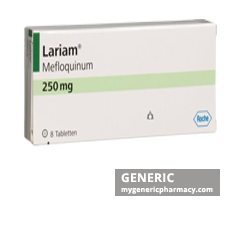
Buy Generic Lariam (Mefloquine) Online
Buy Most Prescribed Mefloquine – Now at 43% Discount.
About Generic Lariam® (Mefloquine)
Key Details
- Generic Lariam™ 250 mg for Malaria
- Buy online Generic Lariam™ 250mg (8 Pills), Lariam Cost, Price $36.40 at 43% Discount
- Effective against chloroquine-sensitive malaria
- Weekly dosing for prophylaxis
- Long half-life
How Generic Lariam Works
Generic Lariam acts against the blood stages of malaria parasites, rapidly reducing parasitemia. It is effective in areas with chloroquine resistance.
Its long half-life allows weekly dosing for prophylaxis. However, neuropsychiatric side effects limit its use in certain patients.
Drug Info
MEFLOQUINE– ORAL (MEF lo kween)
Common Brand Name(s): Lariam™
Other name brands for this medication
Mefque, Mefloc, Meflotas, Mafloma, Meflar, Meflotag, Altimef, Larium, Mefliam, Zoquine
Uses of Lariam
Mefloquine belongs to the class of medications called antimalarials. Mefloquine is used to treat and prevent malaria infections caused by certain types of parasites. Malaria is an infection caused by a group of parasites called Plasmodia that enter the blood through bites from infected mosquitoes.
Before Using Lariam
Before taking mefloquine, tell your doctor or pharmacist if you are allergic to it; or to quinine or quinidine; or if you have any other allergies. This product may contain inactive ingredients, which can cause allergic reactions or other problems. Talk to your pharmacist for more details.
How to Use Lariam
Read the Medication Guide provided by your pharmacist before you start taking mefloquine and each time you get a refill. If you have any questions, ask your doctor or pharmacist. Carry the information wallet card with you at all times.
Take this medication by mouth as directed by your doctor. Take it with food or milk to prevent stomach upset. Do not take the medication on an empty stomach. Take each dose of this medication with a full glass (8 ounces or 240 milliliters) of water. If you have trouble swallowing the medication, the tablet may be crushed and placed in a small amount of water, milk, or other beverage.
For children, the dosage is based on their weight. Early vomiting may occur in children after taking mefloquine. If vomiting occurs in your child after taking this medication, call the doctor right away to see if your child needs to take another dose of the medication. If vomiting continues, check with your doctor for a different medication to use in place of mefloquine.
When using this medication to prevent malaria, it is usually taken once a week. The first dose of this medication should be taken one week before travel, or as directed by your doctor.
Take this medication as prescribed for the full course of treatment. It is important that you do not miss any doses and that you take the drug on a regularly scheduled basis. Remember to take it on the same day each week.
Upon returning from the malaria area, you should keep taking this medication for 4 more weeks. If you are unable to finish this course of mefloquine, contact your doctor.
If this medication is being used for prevention of malaria, it is important to understand that it is still possible to contract the disease. Tell your doctor right away if you develop a fever. Malaria is best treated if therapy is started early.
Side Effects of Lariam
Stomach upset/pain, loss of appetite, nausea/vomiting, headache, muscle pain, or diarrhea may occur. If any of these effects persist or worsen, tell your doctor promptly.
Remember that your doctor has prescribed this medication because he or she has judged that the benefit to you is greater than the risk of side effects. Many people using this medication do not have serious side effects.
Tell your doctor right away if you have any serious side effects, including: loss of coordination,
numbness/tingling/pain of hands or feet, vision changes, unusual tiredness, persistent nausea/vomiting, dark urine, yellowing skin/eyes.
Get medical help right away if you have any very serious side effects, including: fast/slow/irregular heartbeat, fainting, seizures.
A very serious allergic reaction to this drug is rare. However, get medical help right away if you notice any symptoms of a serious allergic reaction, including: rash, itching/swelling (especially of the face/tongue/throat), severe dizziness, trouble breathing.
This is not a complete list of possible side effects. If you notice other effects not listed above, contact your doctor or pharmacist.
Precautions
Before using this medication, tell your doctor or pharmacist your medical history, especially of: mental/mood disorders (such as depression, anxiety, schizophrenia), seizures, heart problems, liver disorder.
This drug may make you dizzy or lose your balance. Alcohol or marijuana can make you more dizzy. Do not drive, use machinery, or do anything that needs alertness until you can do it safely. Limit alcoholic beverages. Talk to your doctor if you are using marijuana.
Before having surgery, tell your doctor or dentist about all the products you use (including prescription drugs, nonprescription drugs, and herbal products).
Mefloquine may cause live bacterial vaccines (such as typhoid vaccine) not to work as well. Therefore, do not have any immunizations/vaccinations while using this medication without the consent of your doctor.
During pregnancy, this medication should be used only when clearly needed. Discuss the risks and benefits with your doctor.
This drug passes into breast milk. Consult your doctor before breast-feeding.
Drug Interactions
Drug interactions may change how your medications work or increase your risk for serious side effects. This document does not contain all possible drug interactions. Keep a list of all the products you use (including prescription/nonprescription drugs and herbal products) and share it with your doctor and pharmacist. Do not start, stop, or change the dosage of any medicines without your doctor's approval.
Some products that may interact with this drug include: artemether-lumefantrine, beta-blockers (such as atenolol, propranolol), chloroquine, halofantrine, ketoconazole, quinidine, quinine, drugs for seizures (such as phenytoin, valproic acid), ziprasidone.
Do not take halofantrine or ketoconazole for 15 weeks after your last dose of mefloquine.
Other medications can affect the removal of mefloquine from your body, which may affect how mefloquine works.
Examples include rifamycins (such as rifabutin), azole antifungals (such as itraconazole), among others.
Missed Dose
If you miss a dose, take it as soon as you remember. If it is near the time of the next dose, skip the missed dose and resume your usual dosing schedule. Do not double the dose to catch up.
Overdose
If overdose is suspected, contact a poison control center or emergency room immediately.
Storage
Store at room temperature away from light and moisture. Do not store in the bathroom. Keep all medications away from children and pets.
Cost of Lariam
The lowest MyGenericPharmacy.com price for the most common version of Lariam (Mefloquine) is around $4.55, 43% off the average online retailing price of $76.00.
What is Lariam / Mefloquine?
Lariam is an antimalarial medication used for the treatment and prophylaxis of malaria, particularly chloroquine-resistant Plasmodium falciparum. It is commonly used for travel prophylaxis in endemic regions.
How Does Lariam Work?
Mefloquine interferes with the parasite’s heme detoxification process within the food vacuole. This leads to accumulation of toxic heme and parasite death during the erythrocytic stage.
Benefits of Lariam
- Effective against chloroquine-resistant malaria
- Weekly dosing for prophylaxis
- Long half-life
- Oral administration
- Useful for travelers to endemic areas
Dosage & How to Use
- Prophylaxis: 250 mg once weekly
- Start 2 weeks before travel
- Continue during stay and for 4 weeks after return
- Treatment: 1250 mg total dose (usually divided)
- Take with food and plenty of water
Side Effects & Precautions
Common side effects may include:
- Nausea
- Dizziness
- Vivid dreams
- Insomnia
Precautions:
- Screen for psychiatric history before prescribing
- Avoid in seizure disorders
- Use caution in cardiac disease
- Discontinue if neuropsychiatric symptoms occur
Who Should Not Take Lariam
- History of depression, anxiety disorders, or psychosis
- Seizure disorders
- Severe cardiac conduction abnormalities
- Hypersensitivity to mefloquine
- Use cautiously in pregnancy (risk-benefit assessment required
Other Information of Lariam:
FOR BEST RESULTS, this medicine should be used along with exercise, a low-cholesterol/low-fat diet, and a weight loss program if you are overweight. FOLLOW THE DIETARY PLAN provided by your doctor. DO NOT SHARE THIS MEDICINE with others for whom it was not prescribed. DO NOT USE THIS MEDICINE for other health conditions. KEEP THIS MEDICINE out of the reach of children and pets. IF USING THIS MEDICINE FOR AN EXTENDED PERIOD OF TIME, obtain refills before your supply runs out
MISSPELLINGS OF LARIAM :
Lariam, Lariom, Larim, Lariyam, Larrium, Laream, Laryam, Lariamn, Larien, Lariun, Laryum, Laream, Lareyam, Lariyam, Lariyem, Leryam, Mefloquine Hydrochloride, Mefoquine Hydrochloride, Mefloqin Hydrochloride, Mefloquin Hydrochloride, Mefluquine Hydrochloride, Mefloquinn Hydrochloride, Mefloquene Hydrochloride, Mephloquine Hydrochloride, Mefloquine Hydrocloride, Mefloquine Hydroclorid.
Buy Generic Lariam (Mefloquine) Online
Buy Most Prescribed Mefloquine – Now at 43% Discount.
About Generic Lariam® (Mefloquine)
Key Details
- Generic Lariam™ 250 mg for Malaria
- Buy online Generic Lariam™ 250mg (8 Pills), Lariam Cost, Price $36.40 at 43% Discount
- Effective against chloroquine-sensitive malaria
- Weekly dosing for prophylaxis
- Long half-life
How Generic Lariam Works
Generic Lariam acts against the blood stages of malaria parasites, rapidly reducing parasitemia. It is effective in areas with chloroquine resistance.
Its long half-life allows weekly dosing for prophylaxis. However, neuropsychiatric side effects limit its use in certain patients.
Drug Info
MEFLOQUINE– ORAL (MEF lo kween)
Common Brand Name(s): Lariam™
Other name brands for this medication
Mefque, Mefloc, Meflotas, Mafloma, Meflar, Meflotag, Altimef, Larium, Mefliam, Zoquine
Uses of Lariam
Mefloquine belongs to the class of medications called antimalarials. Mefloquine is used to treat and prevent malaria infections caused by certain types of parasites. Malaria is an infection caused by a group of parasites called Plasmodia that enter the blood through bites from infected mosquitoes.
Before Using Lariam
Before taking mefloquine, tell your doctor or pharmacist if you are allergic to it; or to quinine or quinidine; or if you have any other allergies. This product may contain inactive ingredients, which can cause allergic reactions or other problems. Talk to your pharmacist for more details.
How to Use Lariam
Read the Medication Guide provided by your pharmacist before you start taking mefloquine and each time you get a refill. If you have any questions, ask your doctor or pharmacist. Carry the information wallet card with you at all times.
Take this medication by mouth as directed by your doctor. Take it with food or milk to prevent stomach upset. Do not take the medication on an empty stomach. Take each dose of this medication with a full glass (8 ounces or 240 milliliters) of water. If you have trouble swallowing the medication, the tablet may be crushed and placed in a small amount of water, milk, or other beverage.
For children, the dosage is based on their weight. Early vomiting may occur in children after taking mefloquine. If vomiting occurs in your child after taking this medication, call the doctor right away to see if your child needs to take another dose of the medication. If vomiting continues, check with your doctor for a different medication to use in place of mefloquine.
When using this medication to prevent malaria, it is usually taken once a week. The first dose of this medication should be taken one week before travel, or as directed by your doctor.
Take this medication as prescribed for the full course of treatment. It is important that you do not miss any doses and that you take the drug on a regularly scheduled basis. Remember to take it on the same day each week.
Upon returning from the malaria area, you should keep taking this medication for 4 more weeks. If you are unable to finish this course of mefloquine, contact your doctor.
If this medication is being used for prevention of malaria, it is important to understand that it is still possible to contract the disease. Tell your doctor right away if you develop a fever. Malaria is best treated if therapy is started early.
Side Effects of Lariam
Stomach upset/pain, loss of appetite, nausea/vomiting, headache, muscle pain, or diarrhea may occur. If any of these effects persist or worsen, tell your doctor promptly.
Remember that your doctor has prescribed this medication because he or she has judged that the benefit to you is greater than the risk of side effects. Many people using this medication do not have serious side effects.
Tell your doctor right away if you have any serious side effects, including: loss of coordination,
numbness/tingling/pain of hands or feet, vision changes, unusual tiredness, persistent nausea/vomiting, dark urine, yellowing skin/eyes.
Get medical help right away if you have any very serious side effects, including: fast/slow/irregular heartbeat, fainting, seizures.
A very serious allergic reaction to this drug is rare. However, get medical help right away if you notice any symptoms of a serious allergic reaction, including: rash, itching/swelling (especially of the face/tongue/throat), severe dizziness, trouble breathing.
This is not a complete list of possible side effects. If you notice other effects not listed above, contact your doctor or pharmacist.
Precautions
Before using this medication, tell your doctor or pharmacist your medical history, especially of: mental/mood disorders (such as depression, anxiety, schizophrenia), seizures, heart problems, liver disorder.
This drug may make you dizzy or lose your balance. Alcohol or marijuana can make you more dizzy. Do not drive, use machinery, or do anything that needs alertness until you can do it safely. Limit alcoholic beverages. Talk to your doctor if you are using marijuana.
Before having surgery, tell your doctor or dentist about all the products you use (including prescription drugs, nonprescription drugs, and herbal products).
Mefloquine may cause live bacterial vaccines (such as typhoid vaccine) not to work as well. Therefore, do not have any immunizations/vaccinations while using this medication without the consent of your doctor.
During pregnancy, this medication should be used only when clearly needed. Discuss the risks and benefits with your doctor.
This drug passes into breast milk. Consult your doctor before breast-feeding.
Drug Interactions
Drug interactions may change how your medications work or increase your risk for serious side effects. This document does not contain all possible drug interactions. Keep a list of all the products you use (including prescription/nonprescription drugs and herbal products) and share it with your doctor and pharmacist. Do not start, stop, or change the dosage of any medicines without your doctor's approval.
Some products that may interact with this drug include: artemether-lumefantrine, beta-blockers (such as atenolol, propranolol), chloroquine, halofantrine, ketoconazole, quinidine, quinine, drugs for seizures (such as phenytoin, valproic acid), ziprasidone.
Do not take halofantrine or ketoconazole for 15 weeks after your last dose of mefloquine.
Other medications can affect the removal of mefloquine from your body, which may affect how mefloquine works.
Examples include rifamycins (such as rifabutin), azole antifungals (such as itraconazole), among others.
Missed Dose
If you miss a dose, take it as soon as you remember. If it is near the time of the next dose, skip the missed dose and resume your usual dosing schedule. Do not double the dose to catch up.
Overdose
If overdose is suspected, contact a poison control center or emergency room immediately.
Storage
Store at room temperature away from light and moisture. Do not store in the bathroom. Keep all medications away from children and pets.
Cost of Lariam
The lowest MyGenericPharmacy.com price for the most common version of Lariam (Mefloquine) is around $4.55, 43% off the average online retailing price of $76.00.
What is Lariam / Mefloquine?
Lariam is an antimalarial medication used for the treatment and prophylaxis of malaria, particularly chloroquine-resistant Plasmodium falciparum. It is commonly used for travel prophylaxis in endemic regions.
How Does Lariam Work?
Mefloquine interferes with the parasite’s heme detoxification process within the food vacuole. This leads to accumulation of toxic heme and parasite death during the erythrocytic stage.
Benefits of Lariam
- Effective against chloroquine-resistant malaria
- Weekly dosing for prophylaxis
- Long half-life
- Oral administration
- Useful for travelers to endemic areas
Dosage & How to Use
- Prophylaxis: 250 mg once weekly
- Start 2 weeks before travel
- Continue during stay and for 4 weeks after return
- Treatment: 1250 mg total dose (usually divided)
- Take with food and plenty of water
Side Effects & Precautions
Common side effects may include:
- Nausea
- Dizziness
- Vivid dreams
- Insomnia
Precautions:
- Screen for psychiatric history before prescribing
- Avoid in seizure disorders
- Use caution in cardiac disease
- Discontinue if neuropsychiatric symptoms occur
Who Should Not Take Lariam
- History of depression, anxiety disorders, or psychosis
- Seizure disorders
- Severe cardiac conduction abnormalities
- Hypersensitivity to mefloquine
- Use cautiously in pregnancy (risk-benefit assessment required
Other Information of Lariam:
FOR BEST RESULTS, this medicine should be used along with exercise, a low-cholesterol/low-fat diet, and a weight loss program if you are overweight. FOLLOW THE DIETARY PLAN provided by your doctor. DO NOT SHARE THIS MEDICINE with others for whom it was not prescribed. DO NOT USE THIS MEDICINE for other health conditions. KEEP THIS MEDICINE out of the reach of children and pets. IF USING THIS MEDICINE FOR AN EXTENDED PERIOD OF TIME, obtain refills before your supply runs out
MISSPELLINGS OF LARIAM :
Lariam, Lariom, Larim, Lariyam, Larrium, Laream, Laryam, Lariamn, Larien, Lariun, Laryum, Laream, Lareyam, Lariyam, Lariyem, Leryam, Mefloquine Hydrochloride, Mefoquine Hydrochloride, Mefloqin Hydrochloride, Mefloquin Hydrochloride, Mefluquine Hydrochloride, Mefloquinn Hydrochloride, Mefloquene Hydrochloride, Mephloquine Hydrochloride, Mefloquine Hydrocloride, Mefloquine Hydroclorid.