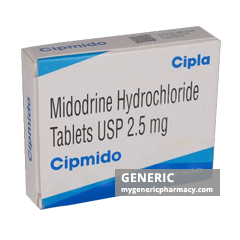
Buy Generic Proamatine (Midodrine) Online
Buy Most Prescribed Midodrine – Now at 25% Discount.
About Generic Proamatine® (Midodrine)
Key Details
- Generic Proamatine™ 2.5mg for Blood Pressure
- Buy online Generic Proamatine™ 2.5 mg (30 Pills), Proamatine Cost, Price $73.80 at 25% Discount
- Reduces dizziness when standing
- Lowers risk of fainting
- Improves daily functioning for people with chronic low BP
How Generic Proamatine Works
Generic Proamatine (midodrine) works by targeting the body's blood vessels to improve blood pressure stability. After ingestion, midodrine is quickly converted into its active form, desglymidodrine, which has a strong ability to activate peripheral alpha-1 adrenergic receptors. These receptors are responsible for tightening blood vessels, which helps maintain blood pressure when gravity pulls blood downward upon standing.
People with orthostatic hypotension experience sudden blood pressure drops because their blood vessels do not constrict effectively. Midodrine strengthens this vascular response, helping the body maintain adequate blood flow to the brain. As a result, symptoms like dizziness, blurred vision, weakness, and fainting are significantly reduced, improving mobility and day-to-day functioning.
Drug Info
MIDODRINE– ORAL (MYE-doe-dreen)
Common Brand Name(s): Proamatine™
Other name brands for this medication
Cipmido, Midodrive, Gutron, Amatine, Inramed, Bramox
Uses of Proamatine
This medication is used for certain patients who have symptoms of low blood pressure when standing. This condition is also known as orthostatic hypotension. Midodrine is used in people whose daily activities are severely affected by this condition, even after other treatments are used (e.g., support stockings). It is known as a sympathomimetic (alpha receptor agonist) that acts on the blood vessels to raise blood pressure.
Before Using Proamatine
Before taking midodrine, tell your doctor or pharmacist if you are allergic to it; or if you have any other allergies. This product may contain inactive ingredients, which can cause allergic reactions or other problems. Talk to your pharmacist for more details.
How to Use Proamatine
Take this medication by mouth with or without food as directed by your doctor, usually 3 times daily (at least 3 to 4 hours between doses). Follow all your doctor's instructions carefully. This drug is taken during daytime hours, when people stand most often. This medicine should not be taken after the evening meal or less than 4 hours before bedtime. Taking your dose is not recommended if you plan to lie down for a long time afterward (e.g., taking a nap).
Dosage is based on your medical condition and response to treatment. Usually, your doctor will start you at a low dose and gradually increase your dose in order to reduce side effects. Do not increase your dose or take it more frequently than prescribed. Use this medication regularly to get the most benefit from it. To help you remember, take it at the same times each day.
Tell your doctor if your condition persists or worsens. This drug should be continued only in those people whose symptoms improve during treatment.
Side Effects of Proamatine
Skin tingling, chills, "goose bumps," stomach pain, or urinary problems (strong/frequent urge to urinate, frequent urination, trouble urinating) may occur. Less commonside effects include dry mouth, dizziness, drowsiness, trouble sleeping, or leg cramps. If any of these effects persist or worsen, tell your doctor or pharmacist promptly.
Remember that your doctor has prescribed this medication because he or she has judged that the benefit to you is greater than the risk of side effects. Many people using this medication do not have serious side effects.
This medication can cause your blood pressure to increase, especially when you are lying down (supine hypertension). Stop taking midodrine and contact your doctor right away if you experience the following signs of supine hypertension: pounding heartbeat, pounding in the ears, headache, blurred vision.
Tell your doctor right away if you have any serious side effects, including: slow heartbeat, unusual feeling in the chest, fainting, pressure/fullness in the head, confusion, anxiety, weakness, vision problems.
A very serious allergic reaction to this drug is rare. However, get medical help right away if you notice any symptoms of a serious allergic reaction, including: rash, itching/swelling (especially of the face/tongue/throat), severe dizziness, trouble breathing.
This is not a complete list of possible side effects. If you notice other effects not listed above, contact your doctor or pharmacist.
Precautions
Before using this drug, tell your doctor your entire medical history, including: high blood pressure, pheochromocytoma, overactive thyroid (hyperthyroidism), difficulty urinating (due to urinary retention or an enlarged prostate), heart disease, liver disease, kidney disease, diabetes.
Get up slowly to reduce dizziness when rising from a sitting or lying position.
This drug may rarely make you dizzy or drowsy or blur your vision. Alcohol or marijuana (cannabis) can make you more dizzy or drowsy. Do not drive, use machinery, or do anything that needs alertness or clear vision until you can do it safely. Limit alcoholic beverages. Talk to your doctor if you are using marijuana (cannabis).
Before having surgery, tell your doctor or dentist that you are taking this medication.
Drug Interactions
Drug interactions may change how your medications work or increase your risk for serious side effects. This document does not contain all possible drug interactions. Keep a list of all the products you use (including prescription/nonprescription drugs and herbal products) and share it with your doctor and pharmacist. Do not start, stop, or change the dosage of any medicines without your doctor's approval.
Some products have ingredients that could raise your blood pressure. Tell your pharmacist what products you are using, and ask how to use them safely (especially cough-and-cold products, diet aids, or NSAIDs such as ibuprofen/naproxen).
Missed Dose
If you miss a dose, take it as soon as you remember. If it is near the time of the next dose, skip the missed dose and resume your usual dosing schedule. Do not double the dose to catch up.
Overdose
If overdose is suspected, contact a poison control center or emergency room immediately.
Storage
Store at room temperature away from light and moisture. Do not store in the bathroom. Keep all medications away from children and pets.
Cost of Proamatine
The lowest MyGenericPharmacy.com price for the most common version of Proamatine (Midodrine) is around $2.46, 25% off the average online retailing price of $99.60.
What is Proamatine / Midodrine?
Proamatine is a medication containing Midodrine, used to treat symptomatic orthostatic hypotension—a condition where blood pressure drops suddenly upon standing. It helps prevent dizziness, light-headedness, and fainting in patients with chronic low blood pressure.
How Does Proamatine Work?
Midodrine is converted inside the body into desglymidodrine, which stimulates alpha-1 receptors in blood vessels. This causes the vessels to constrict, increasing vascular tone and raising blood pressure when standing.
Benefits of Proamatine
- Reduces dizziness upon standing.
- Prevents fainting and near-fainting episodes.
- Improves energy and physical stability.
- Enhances the ability to perform daily activities.
- Helps maintain consistent blood flow to the brain.
- Controls symptoms of chronic low blood pressure.
Dosage & How to Use
- Take 2–3 times a day, usually morning, midday, and late afternoon.
- Avoid taking within 4 hours of bedtime to prevent high BP while lying down.
- Swallow tablets with water; can be taken with or without food.
- Follow your doctor’s exact dose (commonly 2.5 mg to 10 mg, 3 times daily).
- Your doctor may adjust the dose based on blood pressure response.
- Regular monitoring of standing and lying BP is important.
Side Effects & Precautions
Common side effects may include:
- Goosebumps / chills
- Tingling or itching of scalp
- Increased urination
- Elevated blood pressure when lying down (supine hypertension)
- Urinary retention or difficulty urinating
- Slow heartbeat (rare)
Precautions:
- Do not lie down immediately after taking a dose.
- Last dose should be before early evening.
- Check BP in both standing and lying positions regularly.
- Use cautiously in people with:
- Heart disease
- Kidney disease
- Thyroid disorders
- Diabetes with autonomic dysfunction
- Prostate enlargement or urinary problems
- Avoid alcohol (can worsen low BP).
- Tell your doctor before surgery.
Who Should Not Take Proamatine
- Are pregnant (risk of fetal injury or death).
- Have a history of severe allergic reactions to azilsartan.
- Have severe kidney problems (especially bilateral renal artery stenosis).
- Have diabetes and are taking aliskiren (combination increases risk).
- Are on aliskiren with kidney impairment.
- Have severe liver problems (use with caution or avoid based on severity).
Other Information of Proamatine :
FOR BEST RESULTS, this medicine should be used along with exercise, a low-cholesterol/low-fat diet, and a weight loss program if you are overweight. FOLLOW THE DIETARY PLAN provided by your doctor. DO NOT SHARE THIS MEDICINE with others for whom it was not prescribed. DO NOT USE THIS MEDICINE for other health conditions. KEEP THIS MEDICINE out of the reach of children and pets. IF USING THIS MEDICINE FOR AN EXTENDED PERIOD OF TIME, obtain refills before your supply runs out
MISSPELLINGS OF PROAMATINE :
Proamatin, Proamatine, Promatine, Proametine, Proamatine, Promatine, Proametine, Proametin, Proametine, Proamatin, Promatene, Promatene,
Proamotine, Proamatiene, Proamatyn, Proametine, Midodrin, Midodrin, Midodrinne, Midodrine, Midrodrine, Midodrine, Midozrine, Midodrine, Midodren, Miodrine, Midodirine, Midodryne, Midodrene, Midodrien, Midodriene, Midodrinne,
Midodryn, Midodrain, Midodriene, Midodriene.
Buy Generic Proamatine (Midodrine) Online
Buy Most Prescribed Midodrine – Now at 25% Discount.
About Generic Proamatine® (Midodrine)
Key Details
- Generic Proamatine™ 2.5mg for Blood Pressure
- Buy online Generic Proamatine™ 2.5 mg (30 Pills), Proamatine Cost, Price $73.80 at 25% Discount
- Reduces dizziness when standing
- Lowers risk of fainting
- Improves daily functioning for people with chronic low BP
How Generic Proamatine Works
Generic Proamatine (midodrine) works by targeting the body's blood vessels to improve blood pressure stability. After ingestion, midodrine is quickly converted into its active form, desglymidodrine, which has a strong ability to activate peripheral alpha-1 adrenergic receptors. These receptors are responsible for tightening blood vessels, which helps maintain blood pressure when gravity pulls blood downward upon standing.
People with orthostatic hypotension experience sudden blood pressure drops because their blood vessels do not constrict effectively. Midodrine strengthens this vascular response, helping the body maintain adequate blood flow to the brain. As a result, symptoms like dizziness, blurred vision, weakness, and fainting are significantly reduced, improving mobility and day-to-day functioning.
Drug Info
MIDODRINE– ORAL (MYE-doe-dreen)
Common Brand Name(s): Proamatine™
Other name brands for this medication
Cipmido, Midodrive, Gutron, Amatine, Inramed, Bramox
Uses of Proamatine
This medication is used for certain patients who have symptoms of low blood pressure when standing. This condition is also known as orthostatic hypotension. Midodrine is used in people whose daily activities are severely affected by this condition, even after other treatments are used (e.g., support stockings). It is known as a sympathomimetic (alpha receptor agonist) that acts on the blood vessels to raise blood pressure.
Before Using Proamatine
Before taking midodrine, tell your doctor or pharmacist if you are allergic to it; or if you have any other allergies. This product may contain inactive ingredients, which can cause allergic reactions or other problems. Talk to your pharmacist for more details.
How to Use Proamatine
Take this medication by mouth with or without food as directed by your doctor, usually 3 times daily (at least 3 to 4 hours between doses). Follow all your doctor's instructions carefully. This drug is taken during daytime hours, when people stand most often. This medicine should not be taken after the evening meal or less than 4 hours before bedtime. Taking your dose is not recommended if you plan to lie down for a long time afterward (e.g., taking a nap).
Dosage is based on your medical condition and response to treatment. Usually, your doctor will start you at a low dose and gradually increase your dose in order to reduce side effects. Do not increase your dose or take it more frequently than prescribed. Use this medication regularly to get the most benefit from it. To help you remember, take it at the same times each day.
Tell your doctor if your condition persists or worsens. This drug should be continued only in those people whose symptoms improve during treatment.
Side Effects of Proamatine
Skin tingling, chills, "goose bumps," stomach pain, or urinary problems (strong/frequent urge to urinate, frequent urination, trouble urinating) may occur. Less commonside effects include dry mouth, dizziness, drowsiness, trouble sleeping, or leg cramps. If any of these effects persist or worsen, tell your doctor or pharmacist promptly.
Remember that your doctor has prescribed this medication because he or she has judged that the benefit to you is greater than the risk of side effects. Many people using this medication do not have serious side effects.
This medication can cause your blood pressure to increase, especially when you are lying down (supine hypertension). Stop taking midodrine and contact your doctor right away if you experience the following signs of supine hypertension: pounding heartbeat, pounding in the ears, headache, blurred vision.
Tell your doctor right away if you have any serious side effects, including: slow heartbeat, unusual feeling in the chest, fainting, pressure/fullness in the head, confusion, anxiety, weakness, vision problems.
A very serious allergic reaction to this drug is rare. However, get medical help right away if you notice any symptoms of a serious allergic reaction, including: rash, itching/swelling (especially of the face/tongue/throat), severe dizziness, trouble breathing.
This is not a complete list of possible side effects. If you notice other effects not listed above, contact your doctor or pharmacist.
Precautions
Before using this drug, tell your doctor your entire medical history, including: high blood pressure, pheochromocytoma, overactive thyroid (hyperthyroidism), difficulty urinating (due to urinary retention or an enlarged prostate), heart disease, liver disease, kidney disease, diabetes.
Get up slowly to reduce dizziness when rising from a sitting or lying position.
This drug may rarely make you dizzy or drowsy or blur your vision. Alcohol or marijuana (cannabis) can make you more dizzy or drowsy. Do not drive, use machinery, or do anything that needs alertness or clear vision until you can do it safely. Limit alcoholic beverages. Talk to your doctor if you are using marijuana (cannabis).
Before having surgery, tell your doctor or dentist that you are taking this medication.
Drug Interactions
Drug interactions may change how your medications work or increase your risk for serious side effects. This document does not contain all possible drug interactions. Keep a list of all the products you use (including prescription/nonprescription drugs and herbal products) and share it with your doctor and pharmacist. Do not start, stop, or change the dosage of any medicines without your doctor's approval.
Some products have ingredients that could raise your blood pressure. Tell your pharmacist what products you are using, and ask how to use them safely (especially cough-and-cold products, diet aids, or NSAIDs such as ibuprofen/naproxen).
Missed Dose
If you miss a dose, take it as soon as you remember. If it is near the time of the next dose, skip the missed dose and resume your usual dosing schedule. Do not double the dose to catch up.
Overdose
If overdose is suspected, contact a poison control center or emergency room immediately.
Storage
Store at room temperature away from light and moisture. Do not store in the bathroom. Keep all medications away from children and pets.
Cost of Proamatine
The lowest MyGenericPharmacy.com price for the most common version of Proamatine (Midodrine) is around $2.46, 25% off the average online retailing price of $99.60.
What is Proamatine / Midodrine?
Proamatine is a medication containing Midodrine, used to treat symptomatic orthostatic hypotension—a condition where blood pressure drops suddenly upon standing. It helps prevent dizziness, light-headedness, and fainting in patients with chronic low blood pressure.
How Does Proamatine Work?
Midodrine is converted inside the body into desglymidodrine, which stimulates alpha-1 receptors in blood vessels. This causes the vessels to constrict, increasing vascular tone and raising blood pressure when standing.
Benefits of Proamatine
- Reduces dizziness upon standing.
- Prevents fainting and near-fainting episodes.
- Improves energy and physical stability.
- Enhances the ability to perform daily activities.
- Helps maintain consistent blood flow to the brain.
- Controls symptoms of chronic low blood pressure.
Dosage & How to Use
- Take 2–3 times a day, usually morning, midday, and late afternoon.
- Avoid taking within 4 hours of bedtime to prevent high BP while lying down.
- Swallow tablets with water; can be taken with or without food.
- Follow your doctor’s exact dose (commonly 2.5 mg to 10 mg, 3 times daily).
- Your doctor may adjust the dose based on blood pressure response.
- Regular monitoring of standing and lying BP is important.
Side Effects & Precautions
Common side effects may include:
- Goosebumps / chills
- Tingling or itching of scalp
- Increased urination
- Elevated blood pressure when lying down (supine hypertension)
- Urinary retention or difficulty urinating
- Slow heartbeat (rare)
Precautions:
- Do not lie down immediately after taking a dose.
- Last dose should be before early evening.
- Check BP in both standing and lying positions regularly.
- Use cautiously in people with:
- Heart disease
- Kidney disease
- Thyroid disorders
- Diabetes with autonomic dysfunction
- Prostate enlargement or urinary problems
- Avoid alcohol (can worsen low BP).
- Tell your doctor before surgery.
Who Should Not Take Proamatine
- Are pregnant (risk of fetal injury or death).
- Have a history of severe allergic reactions to azilsartan.
- Have severe kidney problems (especially bilateral renal artery stenosis).
- Have diabetes and are taking aliskiren (combination increases risk).
- Are on aliskiren with kidney impairment.
- Have severe liver problems (use with caution or avoid based on severity).
Other Information of Proamatine :
FOR BEST RESULTS, this medicine should be used along with exercise, a low-cholesterol/low-fat diet, and a weight loss program if you are overweight. FOLLOW THE DIETARY PLAN provided by your doctor. DO NOT SHARE THIS MEDICINE with others for whom it was not prescribed. DO NOT USE THIS MEDICINE for other health conditions. KEEP THIS MEDICINE out of the reach of children and pets. IF USING THIS MEDICINE FOR AN EXTENDED PERIOD OF TIME, obtain refills before your supply runs out
MISSPELLINGS OF PROAMATINE :
Proamatin, Proamatine, Promatine, Proametine, Proamatine, Promatine, Proametine, Proametin, Proametine, Proamatin, Promatene, Promatene,
Proamotine, Proamatiene, Proamatyn, Proametine, Midodrin, Midodrin, Midodrinne, Midodrine, Midrodrine, Midodrine, Midozrine, Midodrine, Midodren, Miodrine, Midodirine, Midodryne, Midodrene, Midodrien, Midodriene, Midodrinne,
Midodryn, Midodrain, Midodriene, Midodriene.
FAQ
1. What is Midodrine and what is it used for?
Midodrine is a medical drug that belongs to a class of medication called alpha-adrenergic agonists. This medicine is used to treat a condition in which blood pressure of the body suddenly falls while standing i.e. called orthostatic hypotension causing symptoms such as dizziness, lightheadedness, etc. It works by tightening the blood vessels to increase the blood pressure of the body.
2. When and how to use Midodrine?
Midodrine is available to us in a form of pill that must be taken by mouth with or without food as per your doctor's prescription. An ideal dose of one pill 3 times a day is recommended. The medicine is taken at day times and must be avoided after evening or at least 4 hours before bed. The dosage is based on your medical condition, its response to the treatment, and other medicine that you may be taking along with Midodrine. Your doctor may start the dosage low and may increase it gradually after some while. Take the medicine at the same time daily to get the most benefits from it. Do not increase the dosage or take it more often than prescribed. Contact your doctor in case of any confusion or exception associated with medication.
3. What are the side effects of using Midodrine?
Common side effects observed while medicating with Midodrine are stomach pain, skin tingling, urinary problems, dry mouth, dizziness, leg cramp, drowsiness, etc, may occur. Inform the doctor if these conditions persist or get worse. There are some serious side effects which must be informed to the doctor right away if observed such as blurred vision, coinfusion, weakness, anxiety, slow heartbeat, fainting, unusual feeling in the chest, etc. There are also some severe allergic reactions involved with this medicine which require immediate medical attention if observed such as severe dizziness, facial itching/swelling, trouble breathing, rashes, etc.
4. What precautions must be taken before medicating with Midodrine?
Before the onset of Midodrine medication, one must inform the doctor regarding allergies related to Midodrine, or any other allergies related to the ingredient of the medicine. Inform your doctor regarding your medical history or currently related to overactive thyroid(hyperthyroidism), kidney problems, diabetes, liver problems, adrenal gland tumor, heart problems, breathing problems, difficulty in urinating, etc. Consumption of alcohol and marijunana can make you more dizzy than usual when medicating with Midodrine.
5. Can Midodrine cause heart failure?
Midodrine is a kind of medicine that treats low blood pressure. This medicine is also considered as a safe treatment for people dealing with heart failure due to systolic dysfunction.
6. Can a pregnant woman use Midodrine?
Midodrine is a kind of medicine that must not be used during pregnancy. However, your doctor may let you consume this medicine only if its benefits outweigh the potential risk that could develop to your body or to the unborn baby.
7. Is Midodrine safe during pregnancy?
According to molecular weight, midodrine is expected to get passed into the breastmilk. A hypotension effect could result in various complications in the newborn child. Therefore, a breastfeeding woman must avoid consumption of midodrine during the breastfeeding stage.
8. Is Midodrine better than fludrocortisone?
Midodrine and Fludrocortisone, both the medicines are very effective against high blood pressure. However when compared, fludrocortisone is associated with a higher risk of hospitalization than midodrine as per journals of American Heart Association.
9. Why should it not be taken at bedtime?
Because it can cause:
High blood pressure while lying down (supine hypertension)
10. Does it help fatigue?
Indirectly yes—if fatigue is caused by low blood pressure.