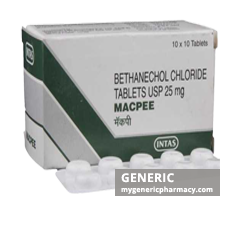
Buy Generic Urecholine (Bethanechol) Online
Buy Most Prescribed Bethanechol – Now at 62% Discount.
About Generic Urecholine® (Bethanechol)
Key Details
- Generic Urecholine™ 25 mg for Antispasmodic
- Buy online Generic Urecholine™ 25 mg (30 Pills), Urecholine Cost, Price $22.50 at 62% Discount
- Helps treat urinary retention
- Improves bladder emptying
- Useful in postoperative urinary retention
How Generic Urecholine Works
After oral administration, bethanechol acts on parasympathetic receptors in the urinary bladder and gastrointestinal tract. This stimulation mimics the action of the neurotransmitter acetylcholine.
By activating muscarinic receptors, the drug increases bladder muscle tone and contractions. This helps patients who cannot empty their bladder properly due to nerve damage or after surgery.
Drug Info
BETHANECHOL – ORAL (be-THAN-e-kole)
Common Brand Name(s): Urecholine™
Other name brands for this medication
Duvoid, Myotonachol, Urotone, Macpee, Betheran, Betawic, Bethanax, Mictuease, Urotas, Bethcol, Uritaz, Lyxobeth
Uses of Urecholine
This medicine is a cholinergic agent used to improve emptying of the bladder. It may also be used to treat other conditions as determined by your doctor.
Before Using Urecholine
INFORM YOUR DOCTOR OR PHARMACIST of all prescription and over-the-counter medicine that you are taking. Inform your doctor of any other medical conditions, allergies, pregnancy, or breast-feeding.
How to Use Urecholine
Follow the directions for using this medicine provided by your doctor. TAKE THIS MEDICINE ON AN EMPTY STOMACH. STORE THIS MEDICINE at room temperature in a tightly-closed container, away from heat and light. IF YOU MISS A DOSE OF THIS MEDICINE, take it as soon as possible. If it is more than 2 hours since your last dose, skip the missed dose and go back to your regular dosing schedule. Do not take 2 doses at once.
Side Effects of Urecholine
SIDE EFFECTS, that may go away during treatment, include abdominal cramps, nausea, diarrhea, changes in vision, watery eyes, headaches, sweating, flushing, or increased saliva. If they continue or are bothersome, check with your doctor. If you notice other effects not listed above, contact your doctor, nurse, or pharmacist.
Precautions
THIS MEDICINE MAY CAUSE dizziness or lightheadedness. If dizziness occurs, sit up or stand up slowly. FOR WOMEN: IF YOU PLAN ON BECOMING PREGNANT, discuss with your doctor the benefits and risks of using this medicine during pregnancy. IT IS UNKNOWN IF THIS MEDICINE IS EXCRETED in breast milk. DO NOT BREAST-FEED while taking this medicine.
Drug Interactions
Drug interactions can result in unwanted side effects or prevent a medicine from doing its job. Use our drug interaction checker to find out if your medicines interact with each other. Check drug interactions.
Missed Dose
If you miss a dose, take it as soon as you remember. If it is near the time of the next dose, skip the missed dose and resume your usual dosing schedule. Do not double the dose to catch up.
Overdose
If overdose is suspected, contact your local poison control center or emergency room immediately. Symptoms of overdose may include nausea, vomiting, fast or irregular heartbeat, unusual drowsiness or dizziness, and loss of consciousness.
Storage
Store at room temperature away from light and moisture. Do not store in the bathroom. Keep all medications away from children and pets.
Cost of Urecholine
The lowest MyGenericPharmacy.com price for the most common version of Urecholine (Bethanechol chloride) is around $0.75, 62% off the average online retailing price of $59.97.
What is Urecholine / Bethanechol?
Urecholine is a medication containing bethanechol, used to treat urinary retention and neurogenic bladder. It stimulates the bladder muscles to help improve urination.
How Does Urecholine Work?
Bethanechol works by stimulating muscarinic cholinergic receptors in the bladder. This increases detrusor muscle contraction, promoting bladder emptying.
Benefits of Urecholine
- Helps treat urinary retention
- Improves bladder emptying
- Useful in postoperative urinary retention
- Helps in neurogenic bladder disorders
- Stimulates gastrointestinal motility
Dosage & How to Use
- Usually taken orally as tablets
- Typical dose: 10–50 mg three to four times daily
- Best taken on an empty stomach
- Dose adjusted according to patient response
- Follow doctor’s instructions carefully
Side Effects & Precautions
Common side effects may include:
- Abdominal cramps
- Diarrhea
- Excessive salivation
- Sweating
- Flushing
Precautions:
- Use cautiously in asthma patients
- Monitor blood pressure and heart rate
- Avoid overdose because it can cause cholinergic toxicity
Who Should Not Take Urecholine
- Patients with asthma
- Individuals with peptic ulcer disease
- Patients with intestinal or urinary obstruction
- People with bradycardia or hypotension
Other Information of Urecholine :
DO NOT SHARE THIS MEDICINE with others for whom it was not prescribed. DO NOT USE THIS MEDICINE for other health conditions. KEEP THIS MEDICINE out of the reach of children and pets. IF USING THIS MEDICINE FOR AN EXTENDED PERIOD OF TIME, obtain refills before your supply runs out.
Buy Generic Urecholine (Bethanechol) Online
Buy Most Prescribed Bethanechol – Now at 62% Discount.
About Generic Urecholine® (Bethanechol)
Key Details
- Generic Urecholine™ 25 mg for Antispasmodic
- Buy online Generic Urecholine™ 25 mg (30 Pills), Urecholine Cost, Price $22.50 at 62% Discount
- Helps treat urinary retention
- Improves bladder emptying
- Useful in postoperative urinary retention
How Generic Urecholine Works
After oral administration, bethanechol acts on parasympathetic receptors in the urinary bladder and gastrointestinal tract. This stimulation mimics the action of the neurotransmitter acetylcholine.
By activating muscarinic receptors, the drug increases bladder muscle tone and contractions. This helps patients who cannot empty their bladder properly due to nerve damage or after surgery.
Drug Info
BETHANECHOL – ORAL (be-THAN-e-kole)
Common Brand Name(s): Urecholine™
Other name brands for this medication
Duvoid, Myotonachol, Urotone, Macpee, Betheran, Betawic, Bethanax, Mictuease, Urotas, Bethcol, Uritaz, Lyxobeth
Uses of Urecholine
This medicine is a cholinergic agent used to improve emptying of the bladder. It may also be used to treat other conditions as determined by your doctor.
Before Using Urecholine
INFORM YOUR DOCTOR OR PHARMACIST of all prescription and over-the-counter medicine that you are taking. Inform your doctor of any other medical conditions, allergies, pregnancy, or breast-feeding.
How to Use Urecholine
Follow the directions for using this medicine provided by your doctor. TAKE THIS MEDICINE ON AN EMPTY STOMACH. STORE THIS MEDICINE at room temperature in a tightly-closed container, away from heat and light. IF YOU MISS A DOSE OF THIS MEDICINE, take it as soon as possible. If it is more than 2 hours since your last dose, skip the missed dose and go back to your regular dosing schedule. Do not take 2 doses at once.
Side Effects of Urecholine
SIDE EFFECTS, that may go away during treatment, include abdominal cramps, nausea, diarrhea, changes in vision, watery eyes, headaches, sweating, flushing, or increased saliva. If they continue or are bothersome, check with your doctor. If you notice other effects not listed above, contact your doctor, nurse, or pharmacist.
Precautions
THIS MEDICINE MAY CAUSE dizziness or lightheadedness. If dizziness occurs, sit up or stand up slowly. FOR WOMEN: IF YOU PLAN ON BECOMING PREGNANT, discuss with your doctor the benefits and risks of using this medicine during pregnancy. IT IS UNKNOWN IF THIS MEDICINE IS EXCRETED in breast milk. DO NOT BREAST-FEED while taking this medicine.
Drug Interactions
Drug interactions can result in unwanted side effects or prevent a medicine from doing its job. Use our drug interaction checker to find out if your medicines interact with each other. Check drug interactions.
Missed Dose
If you miss a dose, take it as soon as you remember. If it is near the time of the next dose, skip the missed dose and resume your usual dosing schedule. Do not double the dose to catch up.
Overdose
If overdose is suspected, contact your local poison control center or emergency room immediately. Symptoms of overdose may include nausea, vomiting, fast or irregular heartbeat, unusual drowsiness or dizziness, and loss of consciousness.
Storage
Store at room temperature away from light and moisture. Do not store in the bathroom. Keep all medications away from children and pets.
Cost of Urecholine
The lowest MyGenericPharmacy.com price for the most common version of Urecholine (Bethanechol chloride) is around $0.75, 62% off the average online retailing price of $59.97.
What is Urecholine / Bethanechol?
Urecholine is a medication containing bethanechol, used to treat urinary retention and neurogenic bladder. It stimulates the bladder muscles to help improve urination.
How Does Urecholine Work?
Bethanechol works by stimulating muscarinic cholinergic receptors in the bladder. This increases detrusor muscle contraction, promoting bladder emptying.
Benefits of Urecholine
- Helps treat urinary retention
- Improves bladder emptying
- Useful in postoperative urinary retention
- Helps in neurogenic bladder disorders
- Stimulates gastrointestinal motility
Dosage & How to Use
- Usually taken orally as tablets
- Typical dose: 10–50 mg three to four times daily
- Best taken on an empty stomach
- Dose adjusted according to patient response
- Follow doctor’s instructions carefully
Side Effects & Precautions
Common side effects may include:
- Abdominal cramps
- Diarrhea
- Excessive salivation
- Sweating
- Flushing
Precautions:
- Use cautiously in asthma patients
- Monitor blood pressure and heart rate
- Avoid overdose because it can cause cholinergic toxicity
Who Should Not Take Urecholine
- Patients with asthma
- Individuals with peptic ulcer disease
- Patients with intestinal or urinary obstruction
- People with bradycardia or hypotension
Other Information of Urecholine :
DO NOT SHARE THIS MEDICINE with others for whom it was not prescribed. DO NOT USE THIS MEDICINE for other health conditions. KEEP THIS MEDICINE out of the reach of children and pets. IF USING THIS MEDICINE FOR AN EXTENDED PERIOD OF TIME, obtain refills before your supply runs out.
FAQ
1. What is Bethanechol chloride (Urecholine) and what is it used for?
Bethanechol chloride is a medical drug sold under the brand name Urecholine which belongs to a class of medication called Cholinergic agents. This medicine is used to treat the inefficacy of the bladder to urinate or empty the bladder due to several situations like bladder muscle spasm, recent surgery, delivering a baby etc. It works by relaxing and improving the muscle ability to squash which improves the control on urination.
2. When and How to take Bethanechol chloride?
Bethanechol chloride is available to us in a form of pill that must be taken by mouth usually before meals. You may take this medicine 1-2 hours prior to your meal on an empty stomach. The dosage is 3-4 times a day depending on your medical illness and its response to the same. Try to take this medicine at the same time daily to get the most of it. Read the leaflet prescription carefully and consult your doctor in case of any confusion.
3. What are side effects of Bethanechol chloride?
Common side effects which generally occur while medicating with Bethanechol chloride are sweating, flushing, watery eyes, abdominal cramps/pain, lightheadedness, nausea, Dizziness, vomiting, increased saliva/urination, headache etc. Inform your doctor if these conditions get worse or persist. There are also some serious and allergic side effects which do not occur usually but require immediate medical attention like fast heartbeat, severe abdominal pain, fainting, trouble breathing, severe dizziness, trouble breathing, rash, itching/swelling (especially of the face/tongue/throat) etc.
4. How effective is Bethanechol chloride?
Bethanechol chloride starts working within 1-2 hour and its effects could last upto 6 hours after the dosage. Your doctor may start the medication with less dosage which will increase gradually in a while. This is done to prevent your body from any side effects. It is advisable to consult your doctor if you are using any other corresponding medicine.
5. What precautions must be taken before medicating with Bethanechol chloride?
Before starting the medication with Bethanechol chloride, one must inform the doctor regarding allergies related to it, any other allergies as these products may contain some ingredient that causes an allergic reaction inside your body. Inform your doctor if you have a medical history related to stomach/intestine/bladder surgery/injury or problem, kidney disease, liver disease, peritonitis, blood pressure problem, overactive thyroid, bladder emptying problem, Parkinson's disease, lung disease, etc. Use of alcohol and marijuana while medicating with Bethanechol chloride may make you more dizzy than usual which must be avoided especially while handling machinery or doing any physical task.
6. How quickly does Bethanechol chloride work?
After the oral administration of Bethanechol chloride, it may take 30 minutes to start its effects on gastrointestinal tracts. However, the medicine may take 60-90 minutes after oral administration to reach its maximum effect on the symptoms.
7. Can you stop bethanechol?
Bethanechol chloride can be stopped for any reason provided by you or your doctor. However, do not stop, change, or increase the dose of your medicine without consulting with your doctor. The medicine could cause an adverse effect when overdosed or withdrawn without proper procedure.
8. How does Bethanechol chloride work in the body?
Bethanechol chloride is a medicine used to treat certain bladder problems such as inability to urinate, unable to empty the bladder completely due to certain bladder disorders, etc. The medicine works by helping the movement of bladder muscle to squeeze more efficiently thereby improving the ability to urinate.
9. Can bethanechol be used for gastroparesis?
Bethanechol chloride is a drug that is numerously available overseas and in a number of countries due to its effective nature against symptoms of overactive disorders. However, a recent study suggested that the use of Bethanechol chloride is not recommended in gastroparesis.
10. Does bethanechol cause incontinence?
Apart from several side effects that are observed during Bethanechol chloride medication, primary diagnosis associated with Bethanechol chloride was urinary incontinence 16%, neurogenic bladder 18%, urinary retention 20%, atony of bladder 35%.
11. Why is bethanechol contraindicated in patients with asthma?
People dealing with asthma must avoid the usage of Bethanechol chloride. A person must also avoid the use of Bethanechol chloride when dealing with chronic obstructive pulmonary disease (COPD) because cholinergic restoration compresses the airways from and to the body.
12. Can a pregnant woman use Bethanechol chloride?
Bethanechol chloride is a kind of medicine that must be used only when clearly needed during pregnancy. One must consult with their health professional before medicating with Bethanechol chloride. Also, it is not known whether the medicine gets passed on into breast milk or not. Consult your doctor before breastfeeding the baby